LATEST NEWS
Bronco plan for NZ bucks US for China
Richard Bosselman
September 9, 2026
America’s famous off-road nameplate is heading here - but the model itself is very different to what is seen Stateside.
PICKING a China-made product to fight off the challenge from Chinese cars has become a Ford strategy.
Intent to add the famous Bronco nameplate here is with a twist.
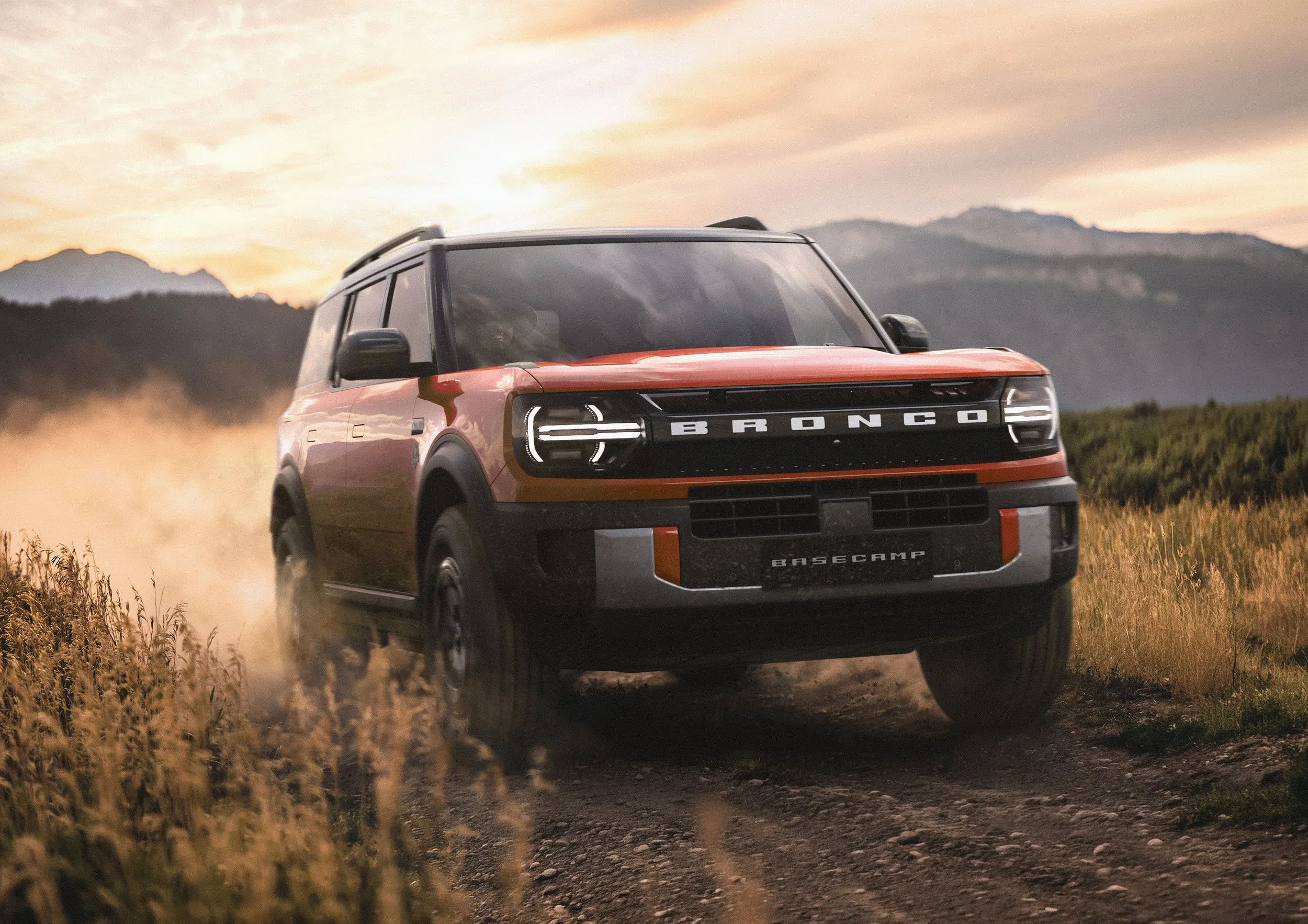
Rather than bring in the version that has strong historic context, that is the model created for North America that current fronts in pure petrol, Ford regionally has instead plucked a fresh concept, out of China, which enables first time delivery of range-extender petrol-electric technology to a Ford sold here.
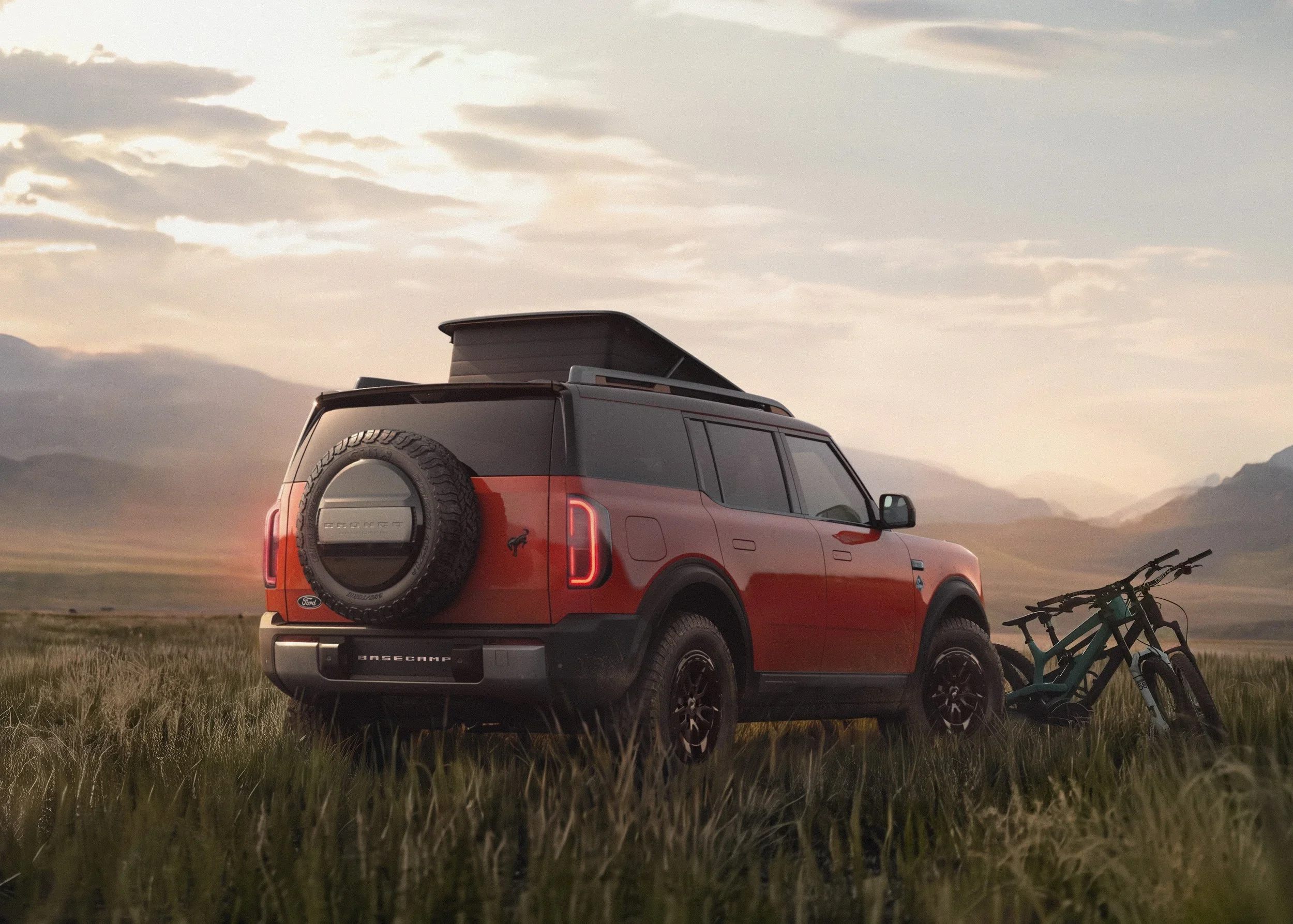
Incoming from the second part of 2027, the Bronco Basecamp was developed by Ford’s joint venture partner Jiangling Motors (JMC) and is built in Nanchang and has little more than badges in common with the American-market four-wheel-drive.
Twin electric motors drive all four wheels from a 49kWh usable battery, and a 1.5-litre turbo petrol engine acts solely as a generator to recharge it, with no direct driving.
Ford’s preliminary estimate for combined range is 800 to 900km on the WLTP cycle. The NEDC figure for China’s Bronco EREV is 1150km. An electric-only figure has yet to share.
That China-market edition makes 310kW and 600Nm and registers a 0-100kmh sprint time of 5.8 seconds. Australasian figures are yet to be locked in.
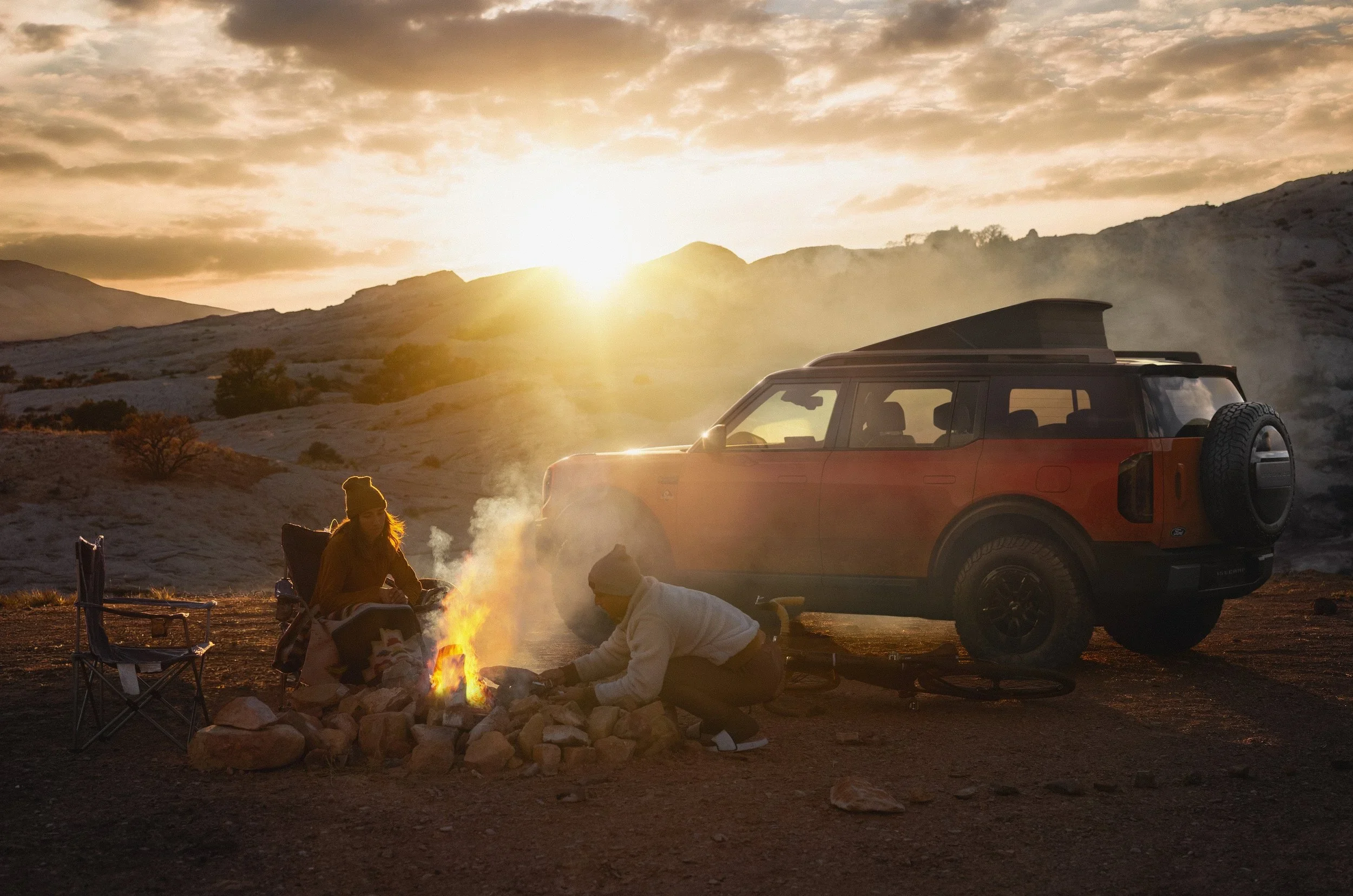
The vehicle has 6.6kW of vehicle-to-load output, which Ford calls Pro Power Onboard. Ford says it is enough to run induction cooktops, coffee machines, camera gear and camp lighting from the battery. A bespoke adapter is required.
Bronco in North American format is a tough off-roader, on a lddader frame chassis, the same T6 underpinning used by Ranger and Everest here. All signs are that the China-sourced car’s monocoque design won’t be as rugged, though it still has some impressive features, with some trims being equipped with locking differentials. Ground clearance for the China market model is listed at 220mm and approach/departure angles are 30 and 32 degrees, respectively.
Ford Australia is tuning the Basecamp’s suspension, drive modes and the software governing when the generator cuts in. Towing is still being sorted.
Inside the Basecamp is nothing like Ford’s Everest SUV, with the dominant feature being a large portrait-oriented touchscreen, minimal physical controls, lush soft-touch materials, a slim digital driver’s display and ambient lighting.
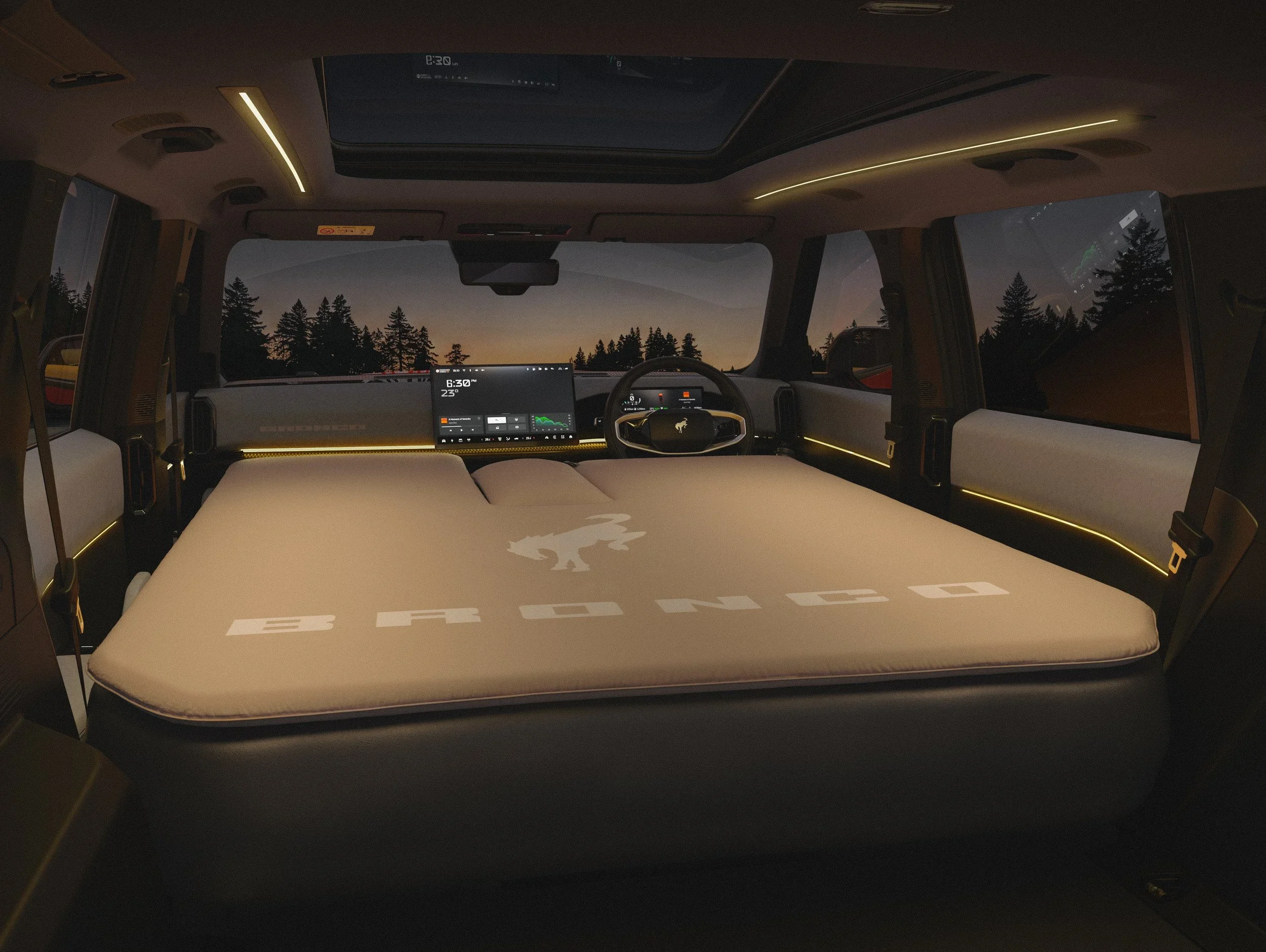
Equipment can include an augmented reality head-up display, a 21-speaker sound system and a pop-up glass roof that raises the cabin for sleeping. That variant also has a 7.5-litre warm-or-cool storage console between the front seats. The rear seats fold flat and a custom-fit inflatable mattress is an accessory. The rear swing gate carries a fold-down table.
In China an all-electric version is available with 650km (CLTC) driving range and a 5.3-second 0-100kmh time but this does not appear to be on the cards for us.
Ford NZ is also set to take an electric Transit City, also out of China, and also set to land in 2027.
The determination to source from China is one also recently made by Mazda, whose Mazda6-like 6e sedan and impending CX6e crossover are also Hiroshima conversions of cars from a partner in China, Changan, which also builds them.