LATEST NEWS
Mitsi’s EV pricing reflects altered state of play
Richard Bosselman
September 24, 2026
ASX VR-e’s position highlights advantage enjoyed by China Inc performers.
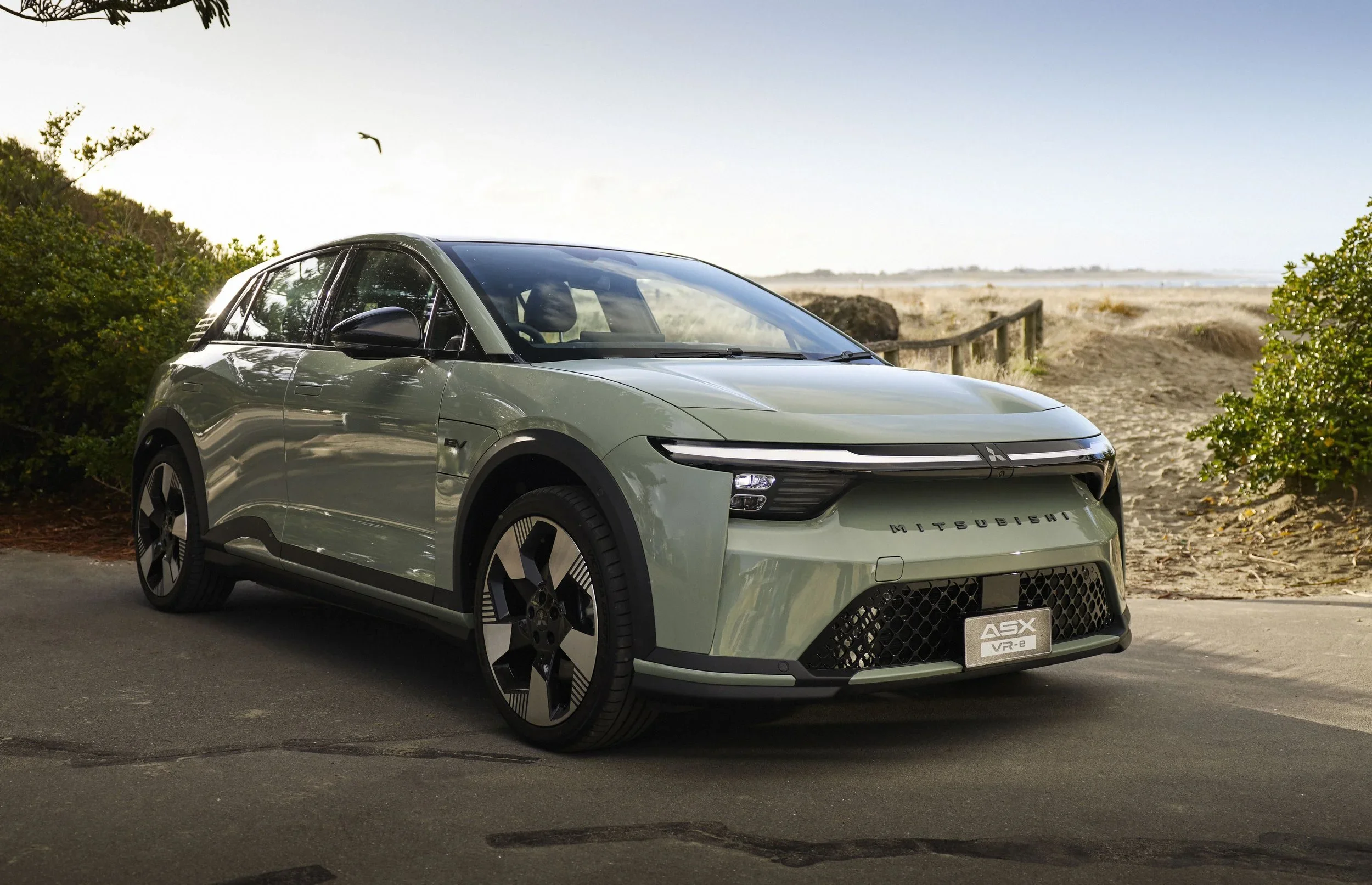
AN electric car Mitsubishi is taking from Taiwan has some of the same tech found in product from mainland China now inundating and increasingly controlling the sector - but doesn’t compete on price.
In announcing pricing for the ASX VR-e, Mitsubishi Motors New Zealand has also confirmed launch in December for its first electric car since it dropped the i-MiEV in 2014, a period when electric was barely a thing for Kiwis.
It intends four variants, three in single motor rear-drive plus a performance dual motor all-wheel-drive flagship that will stand as the brand’s fastest-accelerating product the make has ever offered here.
All have familiar Mitsubishi grading designations.
At $57,990 for the entry LS edition, then $63,990 for the XLS, $67,990 for an Exceed and $72,990 for the flagship GSR all wheel drive, the model’s premium over similar sized and specified product out of mainland China it will likely be evaluated against is clear.
The disparity would seem to hammer home exactly how much advantage producers in China, which considers democratic Taiwan part of its territory, gain from massive manufacturing scale and the communist regime’s policy of meting heavy government funding to its automakers, an assistance singular in international car-making.
In the NZ marketplace, it means a car that will site in the compact crossover sector - hence why it takes the ASX badge already meted to a wholly different petrol car in its 17th year of sale - will start out $17,000 above one of China Inc’s stronger performers in that category, the BYD Atto 2, and is more closely aligned with a competitor from South Korea, the Kia EV3, which begins at $55,520.
The ASX VR-e is a mildly re-configured edition of a car well known in Taiwan, having been on sale there since 2023 as the Foxtron Model B. Performance and range figures appear to be identical.
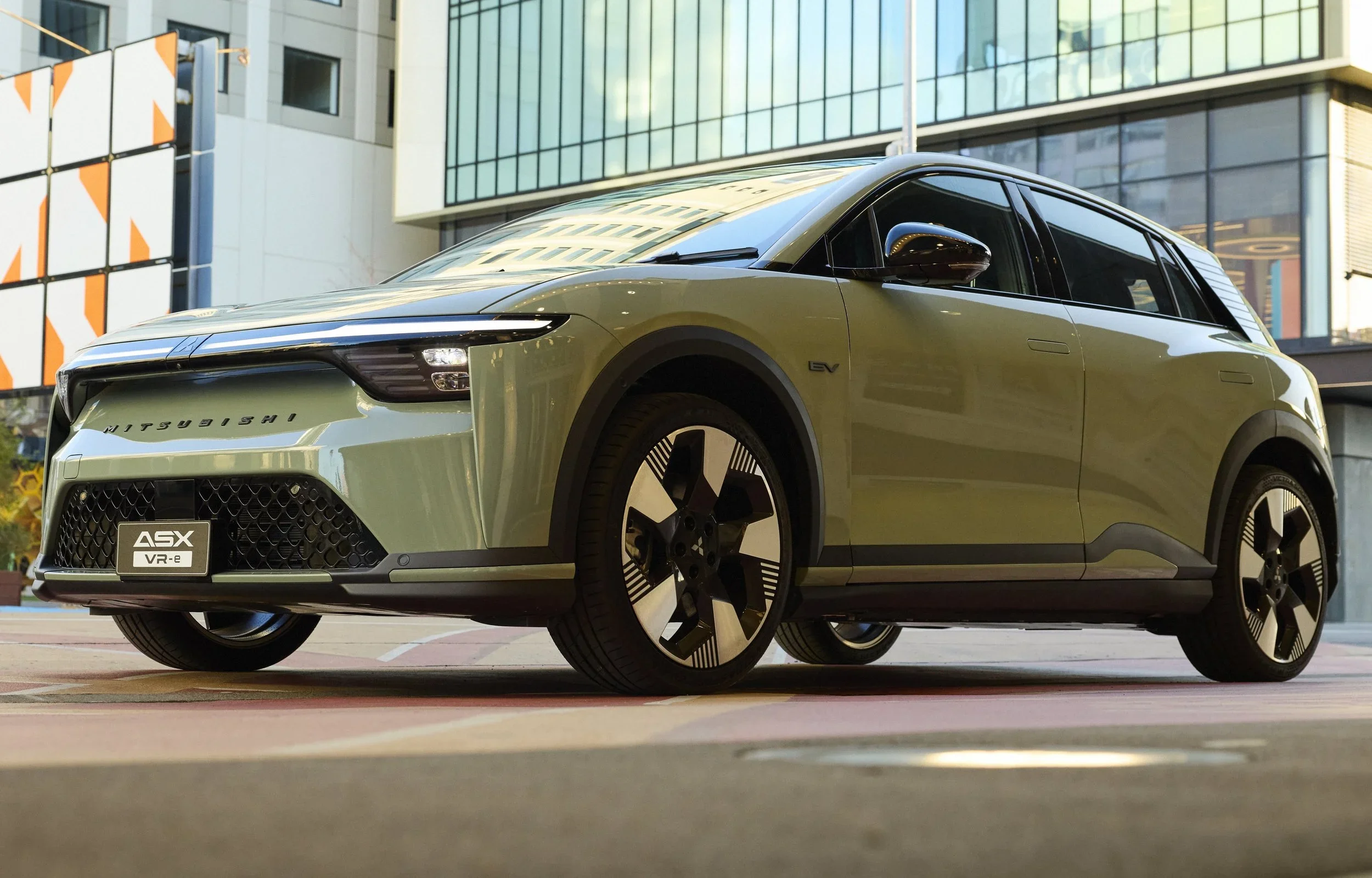
It has styling from Italian design house Pininfarina and measures 4.3 metres long, 1.8m wide and 1.5m tall.
The rear-drive editions use a 57.7kWh lithium iron phosphate battery and produce 171kW of power and 350Nm of torque, with 0-100kmh in 6.8 seconds.
The LS has the longest claimed range at 403km on the WLTP testing cycle. The XLS can travel up to 398km, while the Exceed has a claimed 380km range.
The 342kW and 700Nm GSR will achieve 0-100kmh in 3.9 seconds, a feat that makes it the quickest accelerating Mitsubishi ever sold New Zealand. The smartest accelerating car it sold previously was almost certainly the Lancer Evo 6.5 Tommi Makinen edition, which nailed the sprint in 4.4 seconds.
Local brand testimony the ASX VR-e GSR is the fastest car MMNZ has sold here seems highly contestable, however, given the Model B donor is speed capped at 180kmh. It seems unlikely that would have been altered by Mitsubishi. MMNZ has sold many internal combustion cars that have had higher top speeds.
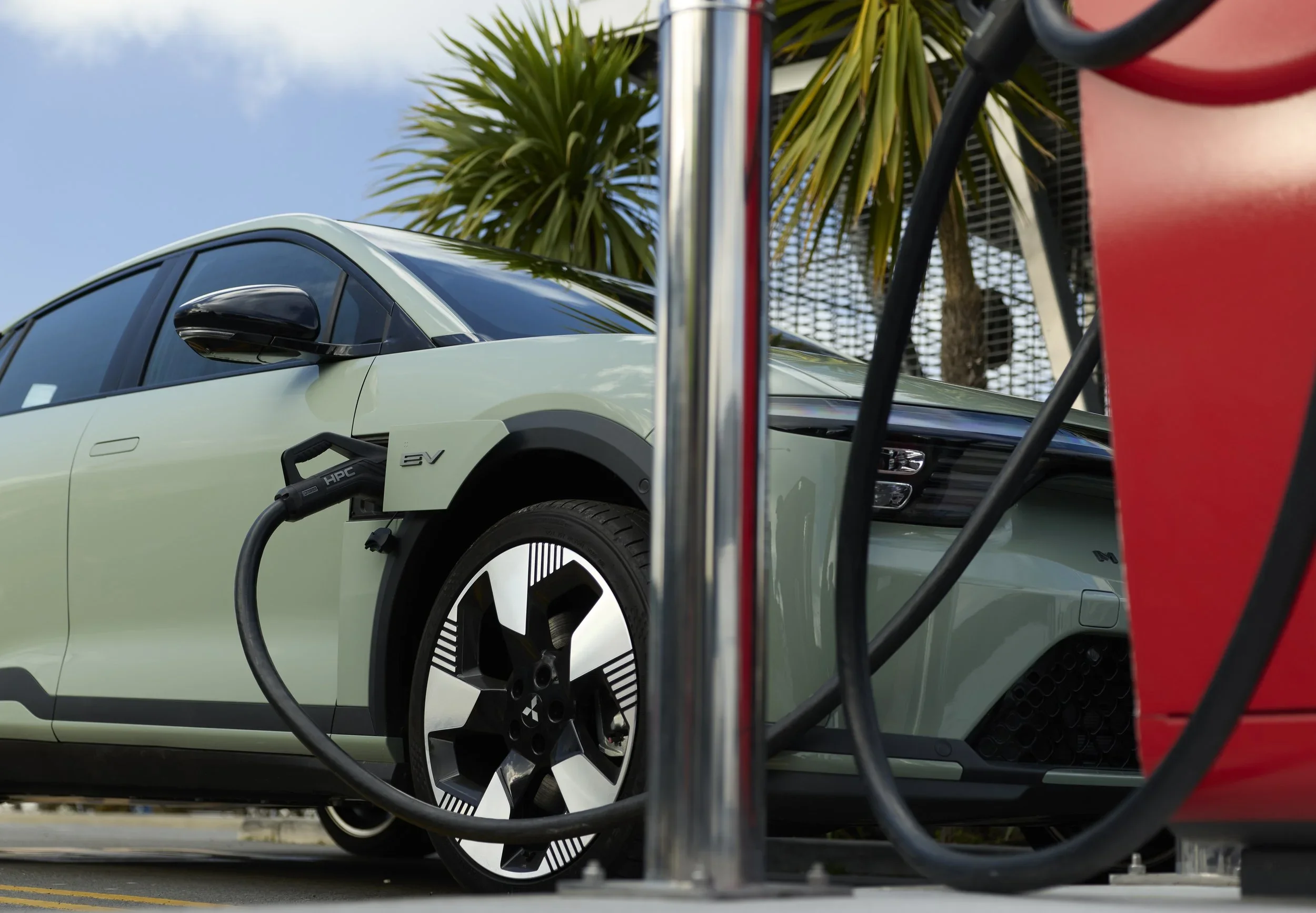
DC fast charging at up to 134kW, is claimed, optimally enabling a 10–80 percent charge in approximately 30 minutes. The car has vehicle-to-load capability delivering up to 3.6kW of external power through an accessory adapter, pricing for which has not been clarified.
New Zealand and Australia are the first recipients of the car in its Mitsubishi guise.
The maker is not a Mitsubishi company but instead is a partner.
Foxtron’s parent is Foxconn, the world's largest contract electronics manufacturer, which counts major technology companies such as Apple, for which it makes the iPhone, among customers.
The deal is Foxconn’s first first major contract in the booming and highly competitive EV industry - ASX VR-e is also the first Taiwan-sourced car to be sold here.
MMNZ has voiced optimism ASX VR-e will strengthen its established electrified range, alongside the popular Outlander and Eclipse Cross plug-in hybrids and the new Outlander Sport hybrid also introducing in the last part of this year.
ASX VR-e’s exterior design emphasises aerodynamic performance. Key features include an S-Duct, which channels airflow from the centre of the front bumper over the hood surface, and active grille shutters, which help reduce aerodynamic drag according to driving conditions.
Horizontal stripe motifs have been incorporated into the front and rear lighting signatures, rear pillars, and dedicated wheel design to create a unified and modern appearance.
Horizontal LED lighting and dynamic welcome lights further enhance the vehicle’s advanced styling, while the stripe pattern on the C-pillar contributes to a cohesive design identity, the local distributor claims.
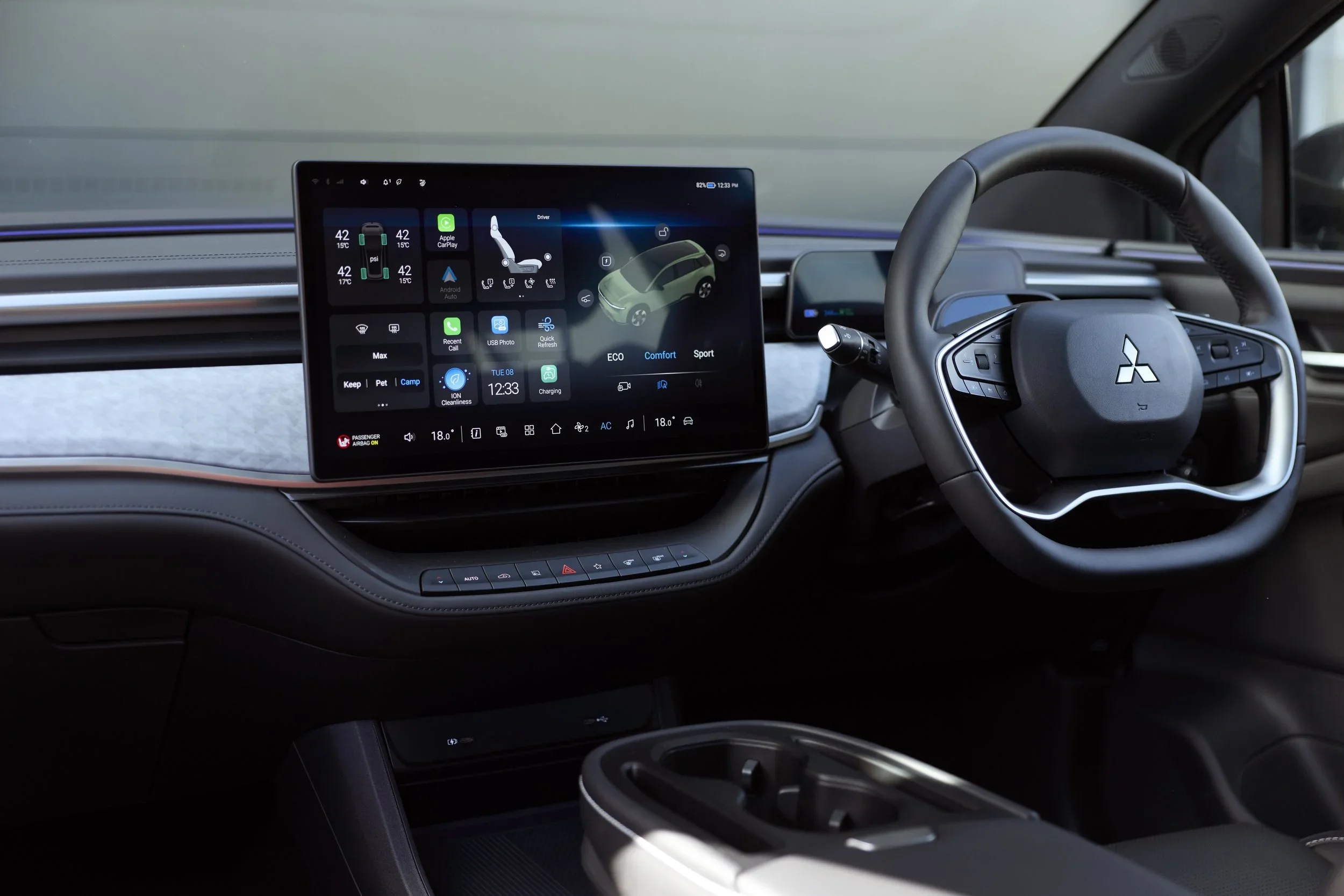
The cabin has a 15.6-inch central infotainment touchscreen and 9.2-inch digital driver display and the car runs Eco, Comfort and Sport drive modes, with steering weighting also adjustable.
The XLS specification includes heated and ventilated front seats, an eight-way power driver's seat with memory, four-way power passenger seat, ambient interior lighting, a surround view and remote parking assist.Five levels of regenerative braking and a one pedal mode also feature.
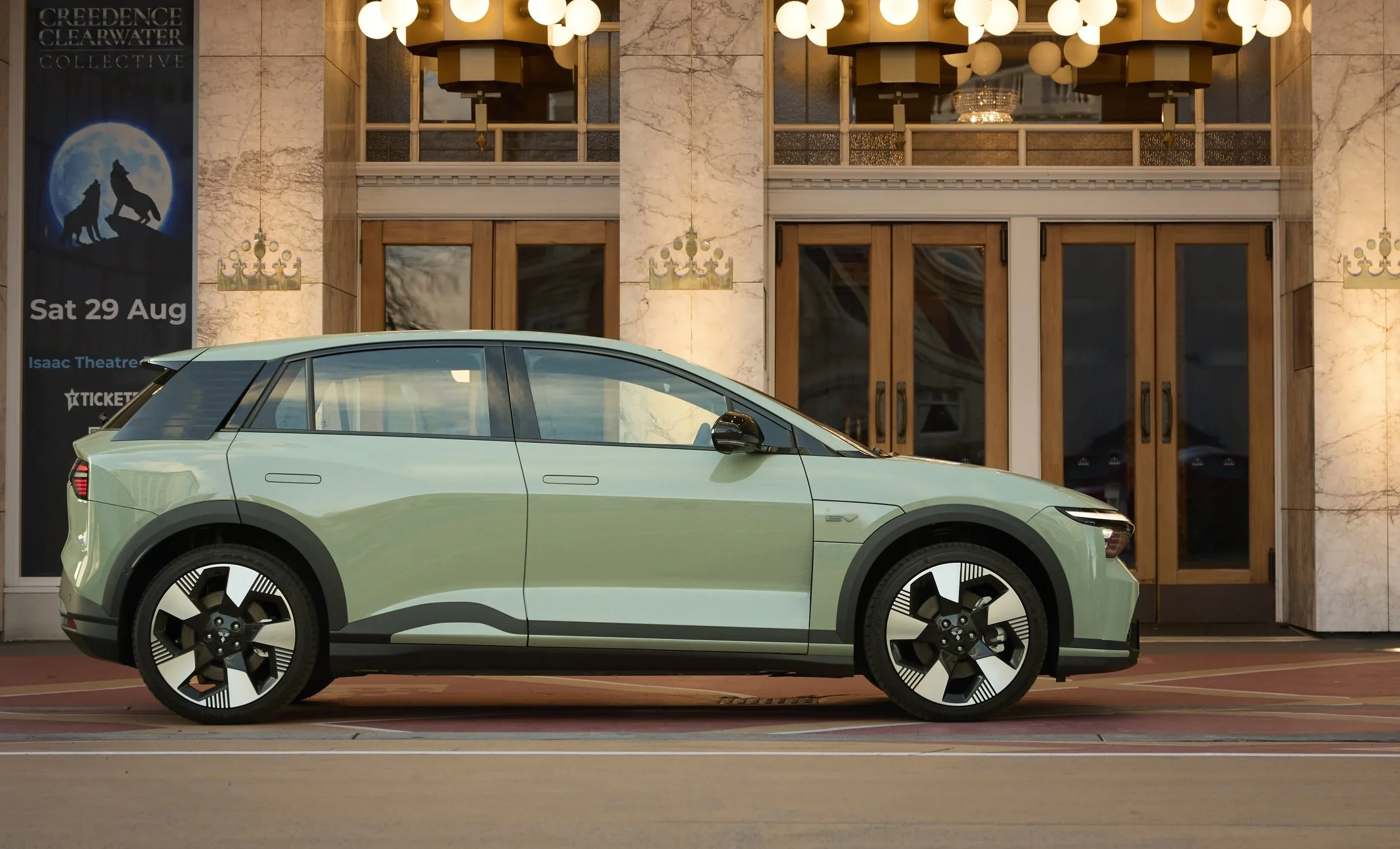
Exceed and GSR grades include 20-inch two-tone alloy wheels, a panoramic glass roof, hands-free power tailgate and a 12-speaker audio system. GSR also has a microsuede seat trim with blue stitching and two-tone exterior colour options.
This is the first Mitsubishi here with connected functionality, driving via a smartphone app. Mitsubishi Connect allows remote checking of charging status and remaining EV range. A user can also view and export charging history, pre-condition the cabin, locate the vehicle and check information including tyre pressures and vehicle warnings. Remote functions also include door locking and unlocking, window operation, and horn and light activation, while over-the-air software updates allow compatible vehicle systems to be updated without a dealership visit.
It also supports eCall, providing an automatic connection to an emergency call centre following events such as airbag deployment, as well as manual SOS functionality.
This function is being promoted heavily as a must-have by the national crash test auditor, ANCAP, but there has been resistance from the 111 network because of how the detail transmitted by the car avails.
Other distributors circumvent this by having the emergency call go to an independent operator, often located overseas. MMNZ has not yet clarified if that is the case for its set-up.
The car has also yet to achieve a crash test score from ANCAP.